Sound installation and limited audio-zine editions, 2026
Can You S…?
A nervous system caught in unstable transmission - between message and noise, presence and absence, connection and collapse.
Can You S…? emerged in the months following the war between Iran, Israel, and the United States. Rather than making a work about war itself, the project began with what prolonged crisis does to perception, memory, language, and the body: not the event, but the nervous system forced to exist within unstable transmission.
At the center of the work is a condition of suspension: the sensation of approaching a threshold without ever crossing it. Waiting for something that never fully arrives. Refreshing messages. Listening to distorted broadcasts. Hearing unfinished conversations. Trying to remember something without knowing precisely what has been forgotten.
We kept returning to the idea of edging, not only in its sexual meaning but as a structural condition: a body held indefinitely in anticipation without release.
“A constant edging. Edging our minds and our bodies.”
Crisis produces a similar state. Alertness outlasts the event itself. Desire, fear, intimacy, anxiety, and exhaustion begin collapsing into one another, while resolution remains continuously deferred.
The sound
Sound as transmission
During the crisis, sound often arrived before information did.
When communication was interrupted or inaccessible, a change in the situation could first become perceptible through sound: an explosion, aircraft overhead, people celebrating somewhere outside, distant chants whose meaning or origin was unclear, a fragment of a broadcast.
Sound became both information and uncertainty.
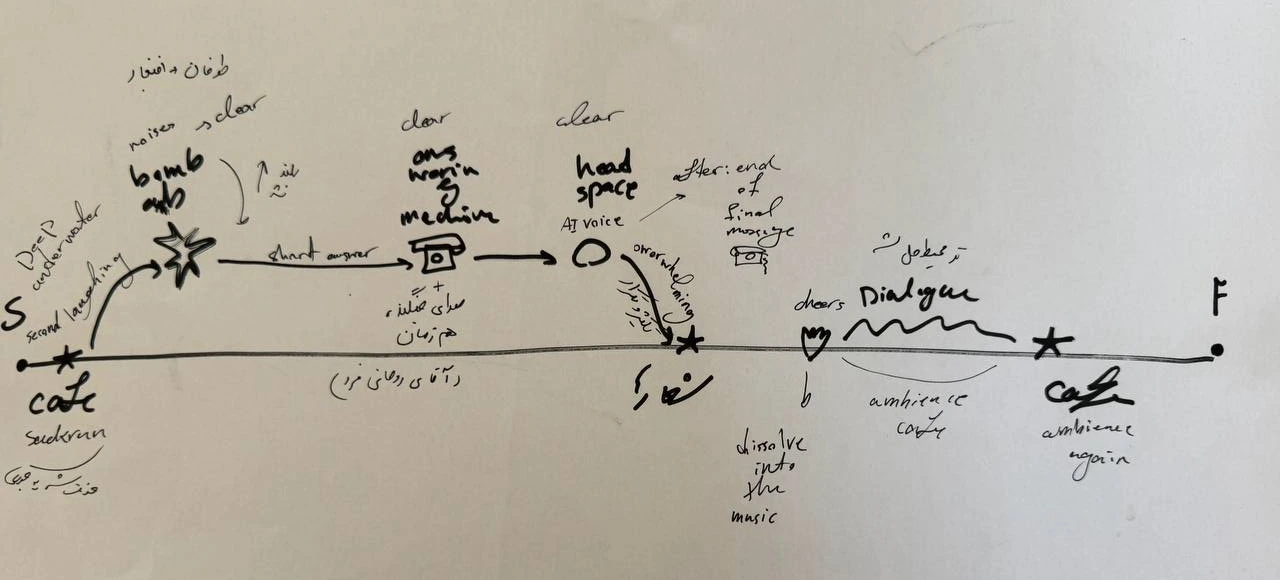
The audio work began as a collage of recordings associated with that period, alongside sounds produced later in response to the same suspended state.
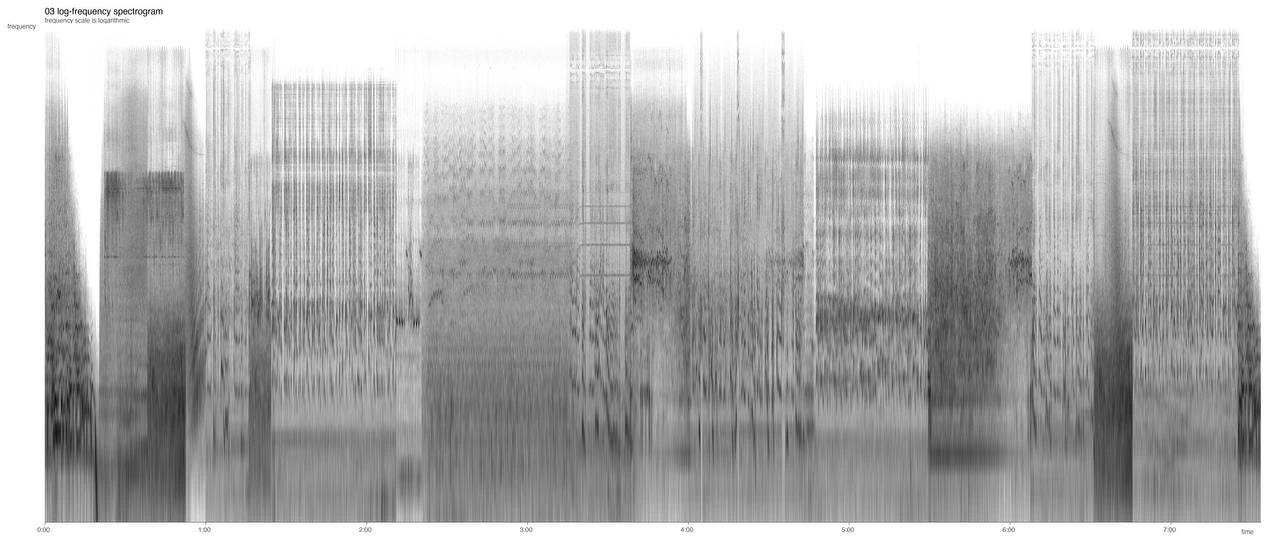
Across 7 minutes and 33 seconds, jets, parties, interrupted conversations, sirens, radio interference, breathing, buffering noises, static, and recurring sonic motifs overlap and mutate.
Running through these fragments is a calm, instructional voice resembling a guided meditation. Its language gradually becomes incompatible with the situation it is supposedly helping the listener endure: a meditation on how to remain mindful during bombardment.
The transformation is deliberately gradual rather than spectacular. Meaning begins to drift. Sentences overlap. Breaths distort. Silences extend unnaturally. Communication remains possible, but increasingly unstable.
Proposal to installation
From proposal to installation
The work was conceived and produced through remote collaboration between Iran and Los Angeles.
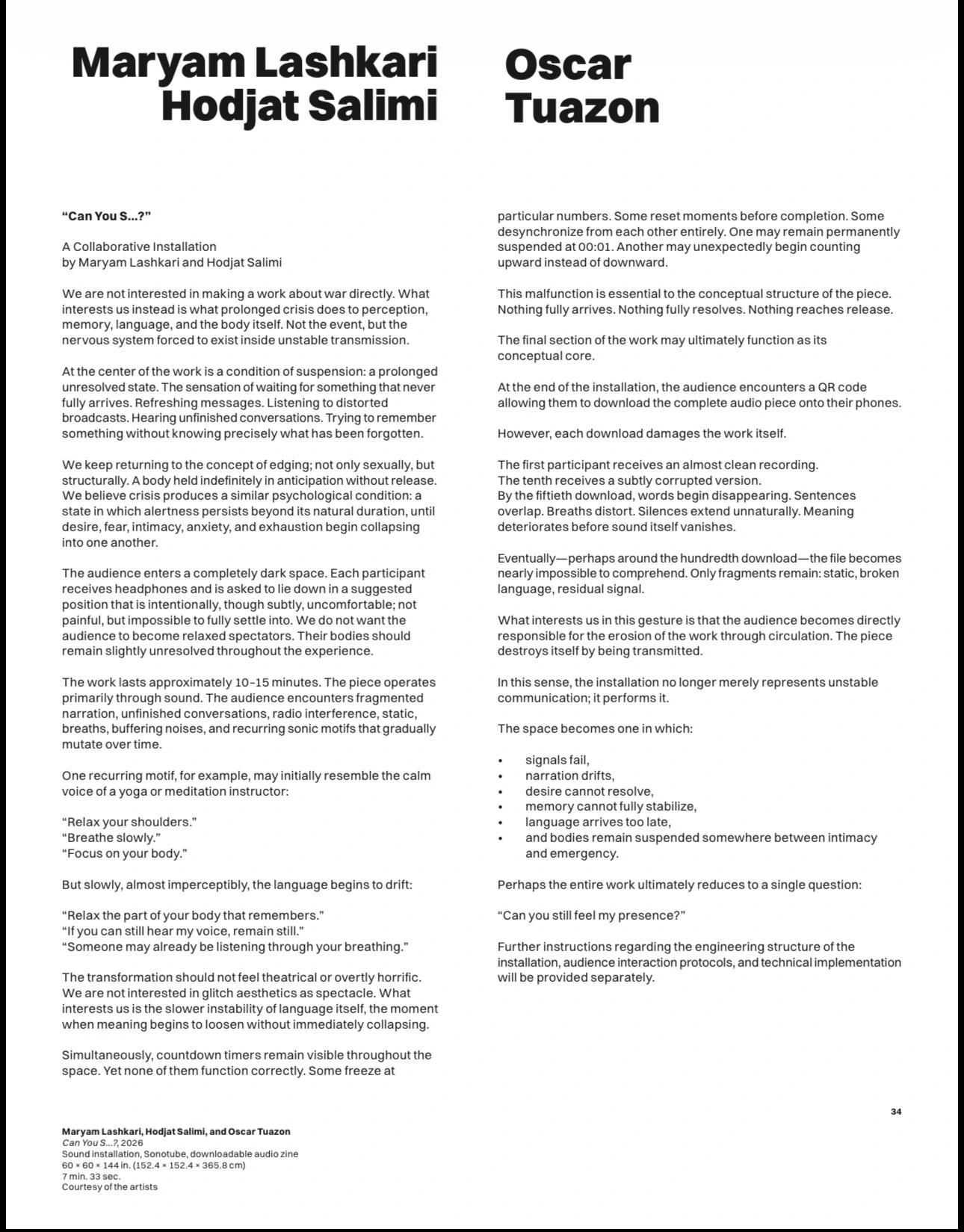
Our original proposal imagined a completely dark environment containing individual listening positions and multiple countdown timers. The timers would appear functional but gradually reveal different forms of failure: freezing at particular numbers, resetting before completion, falling out of synchronization, or unexpectedly counting upward.
The malfunction was not a technical error but part of the conceptual structure. Nothing fully arrives. Nothing completely resolves.
The physical work that eventually appeared in Los Angeles was different.
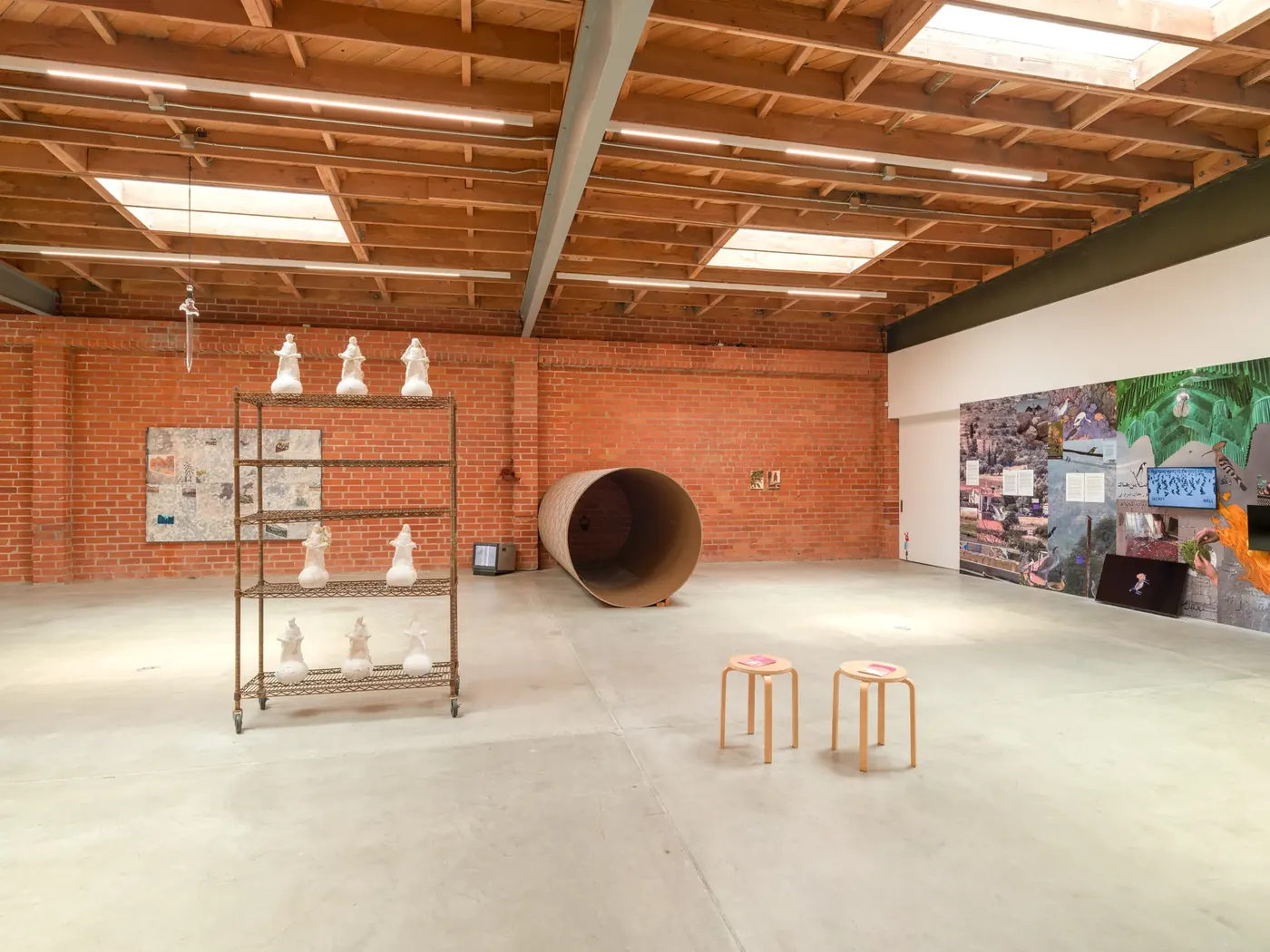
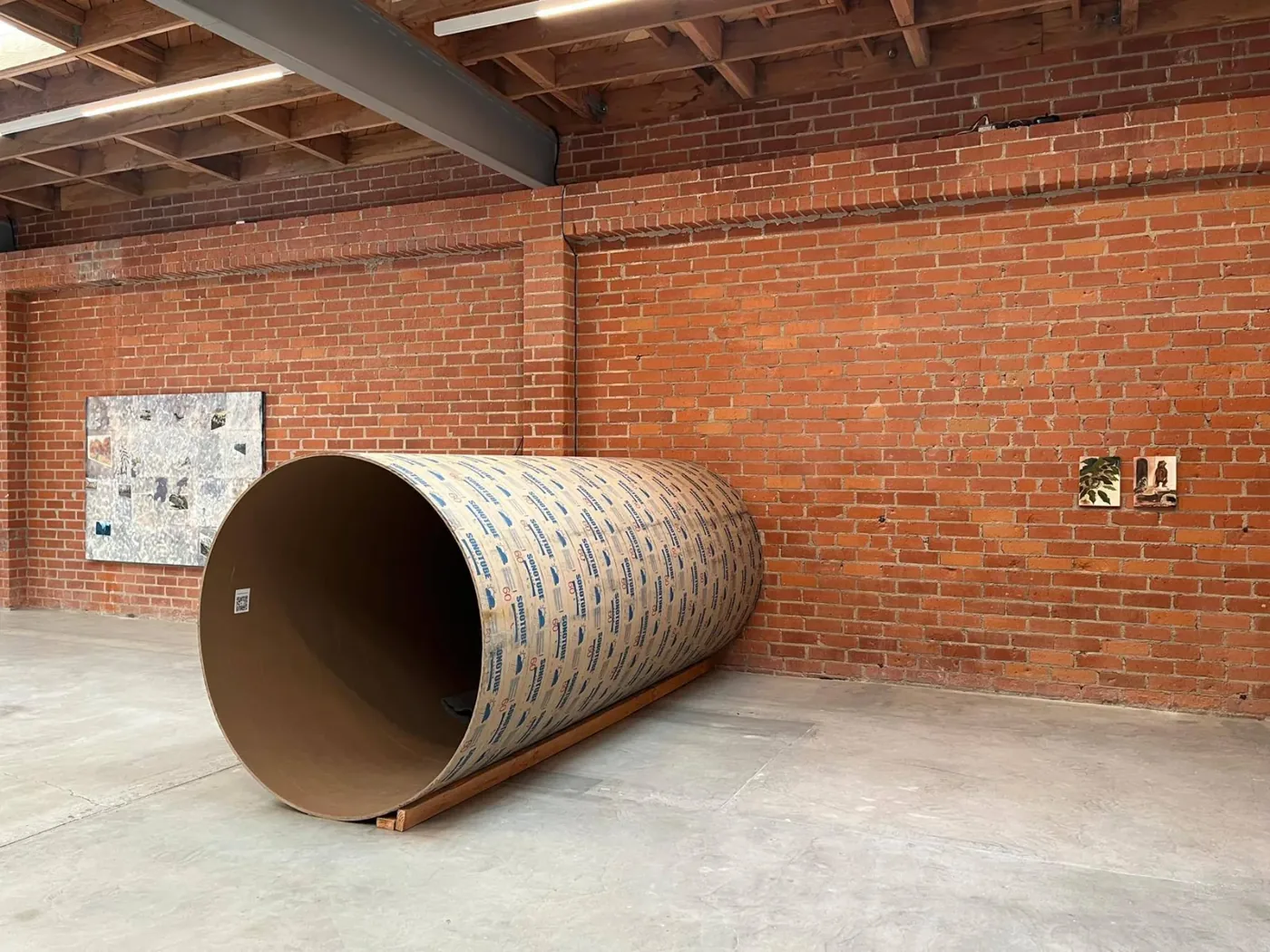
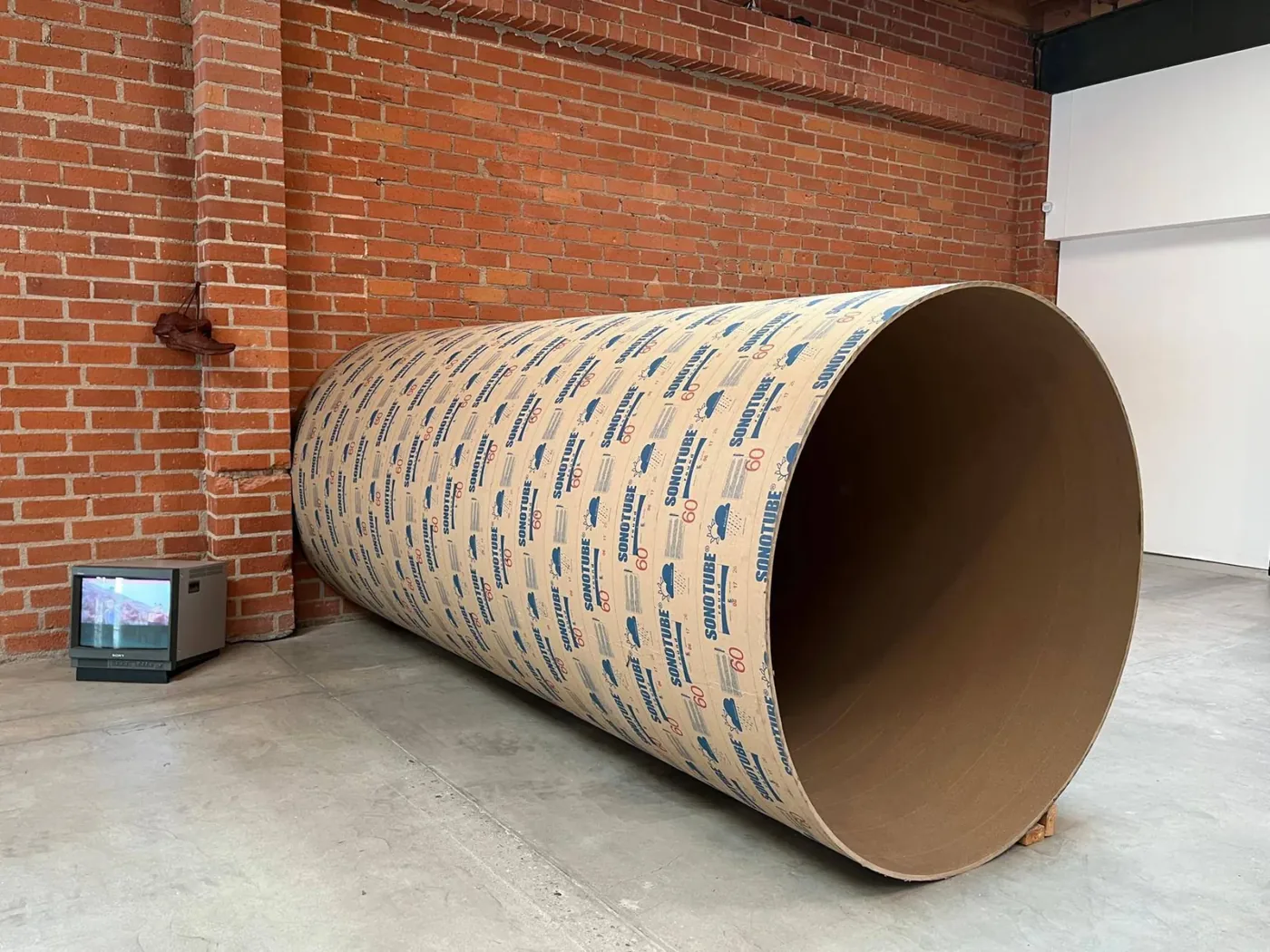
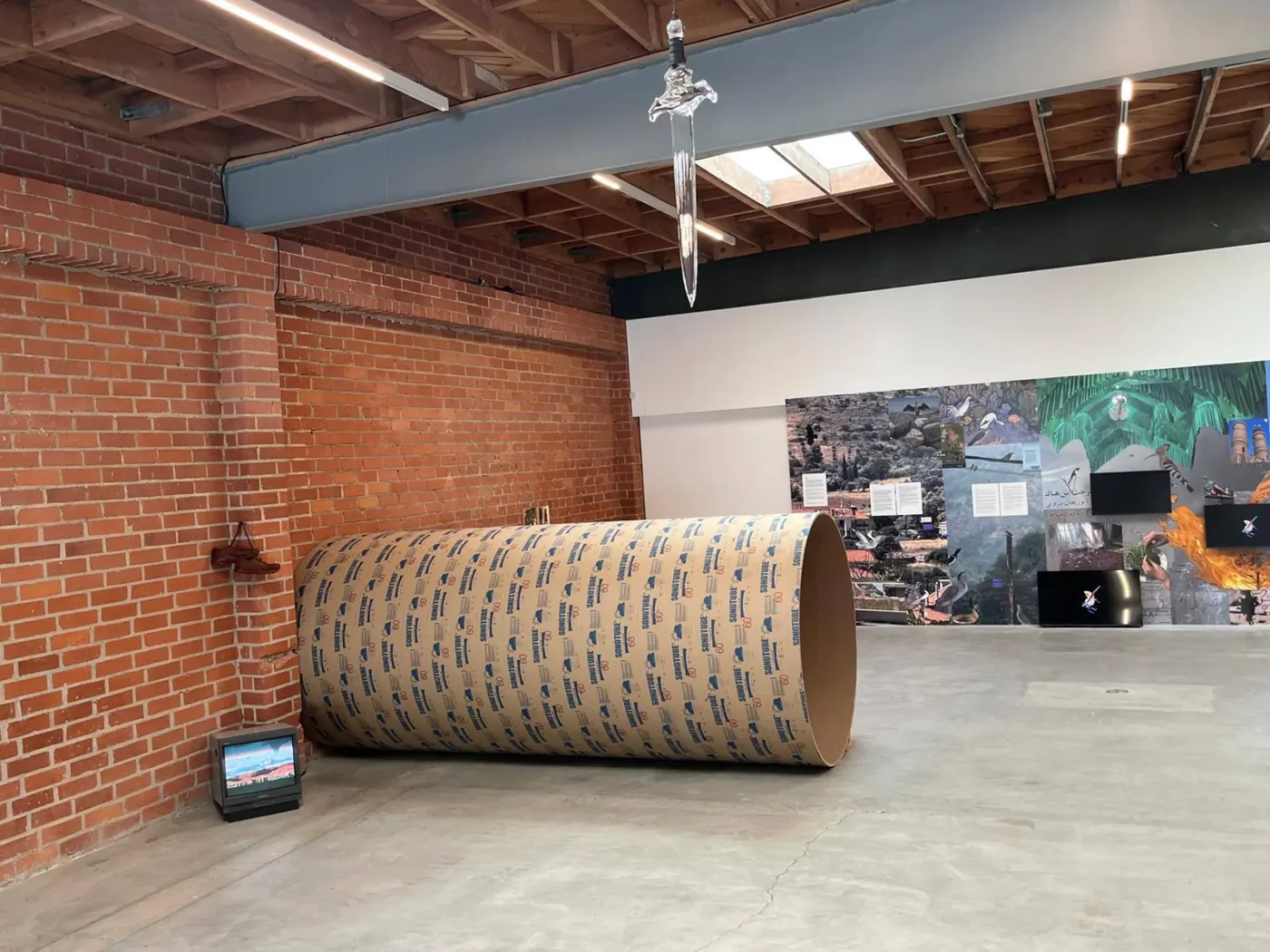
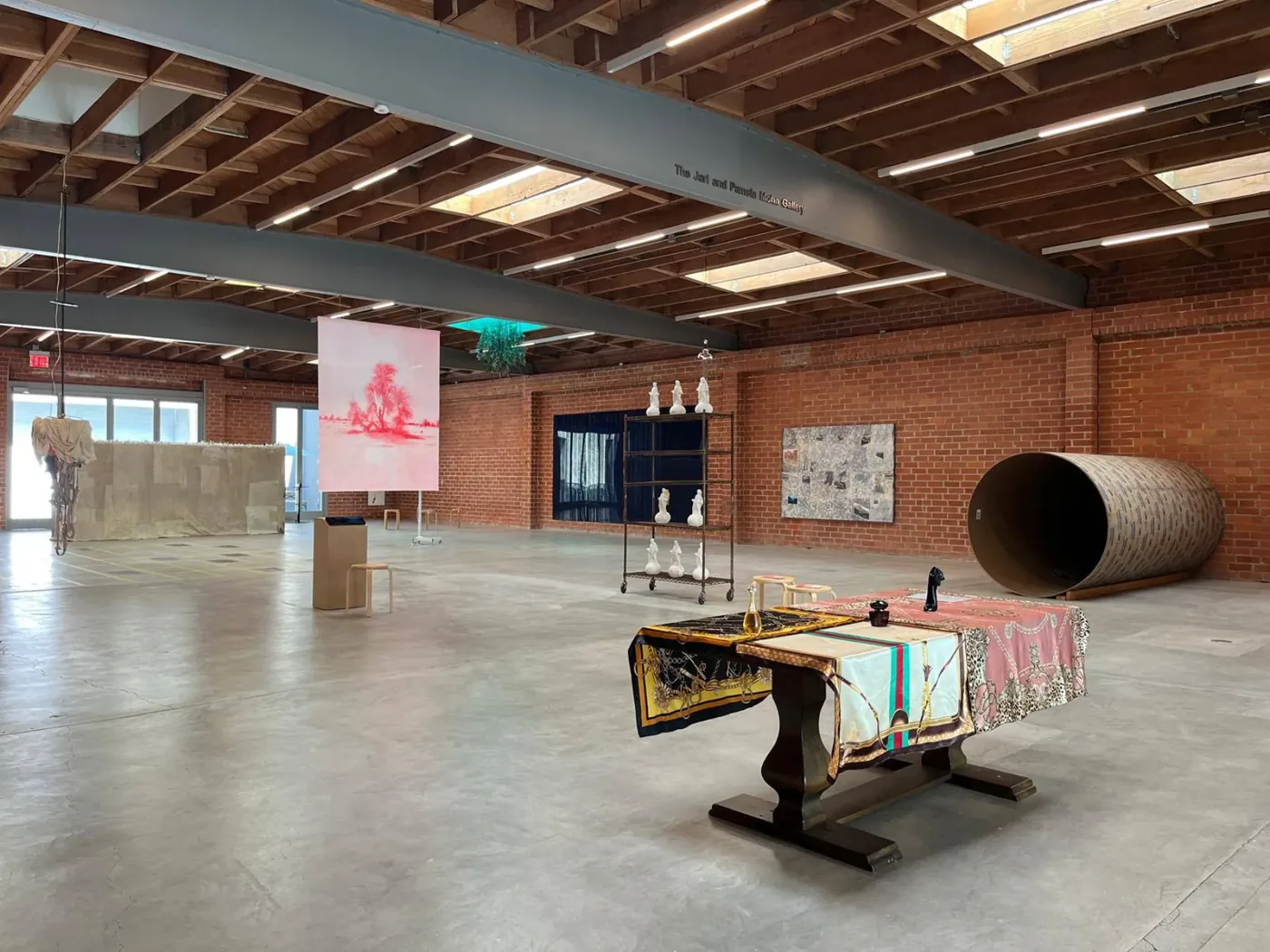
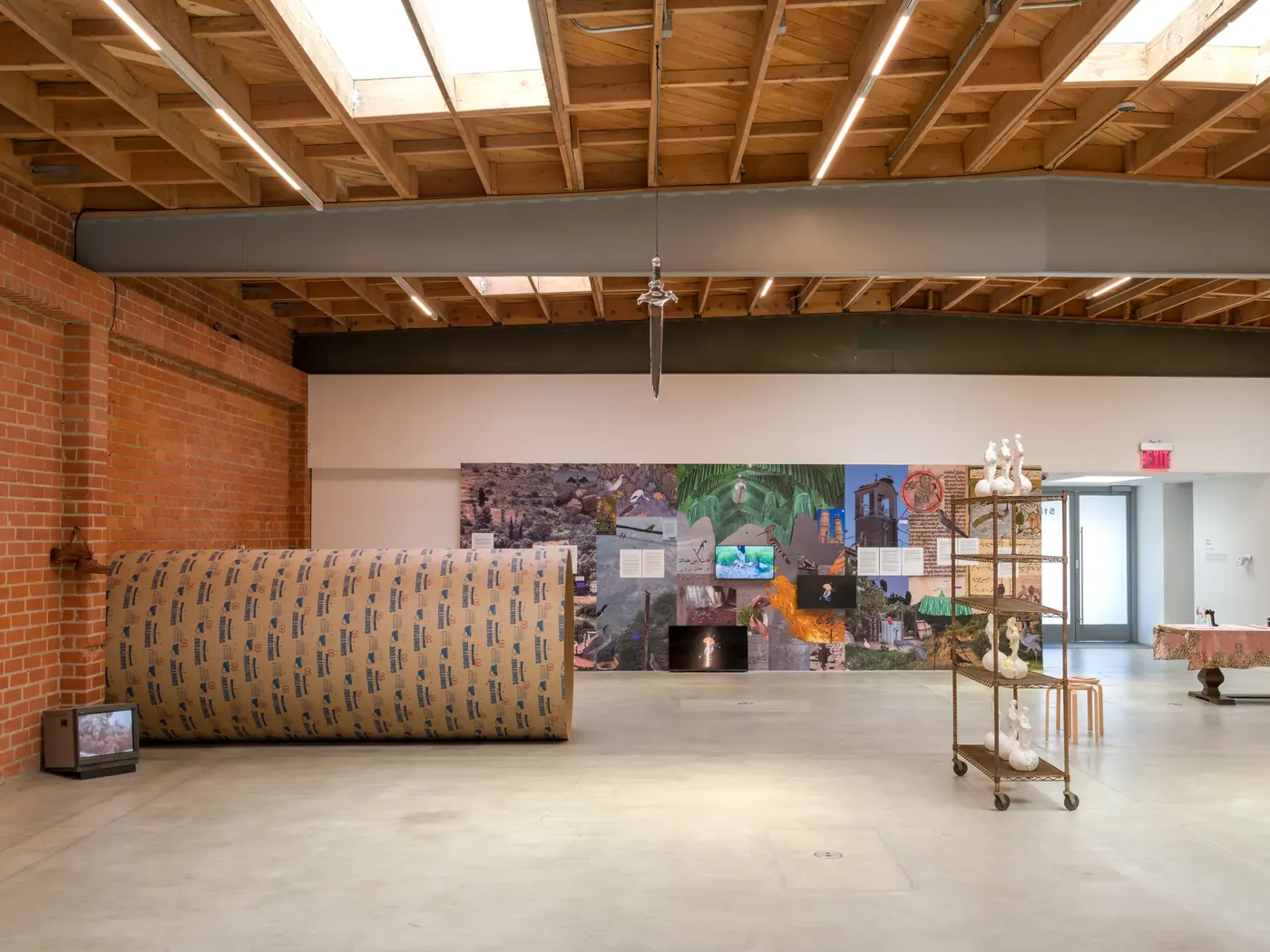
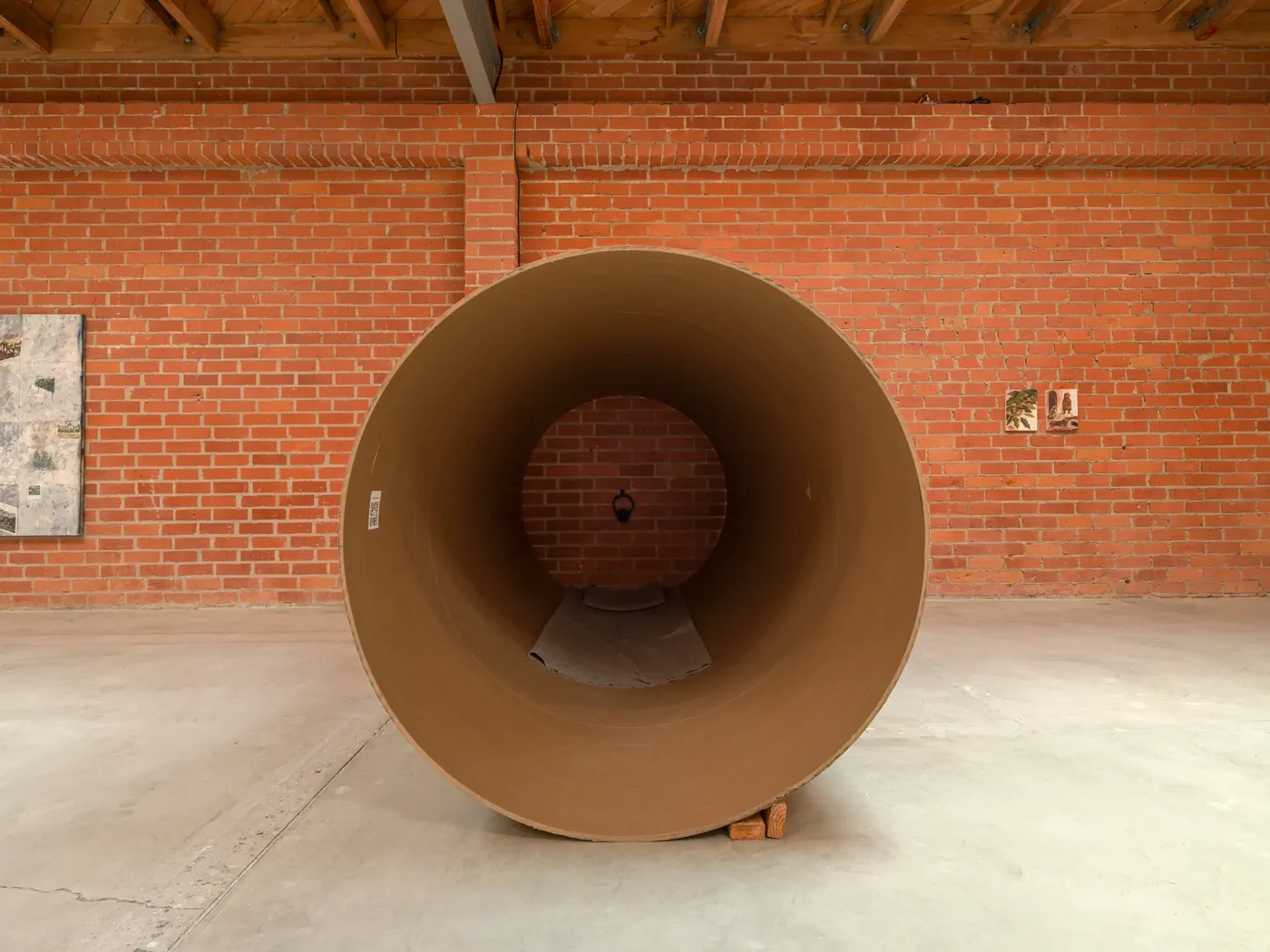
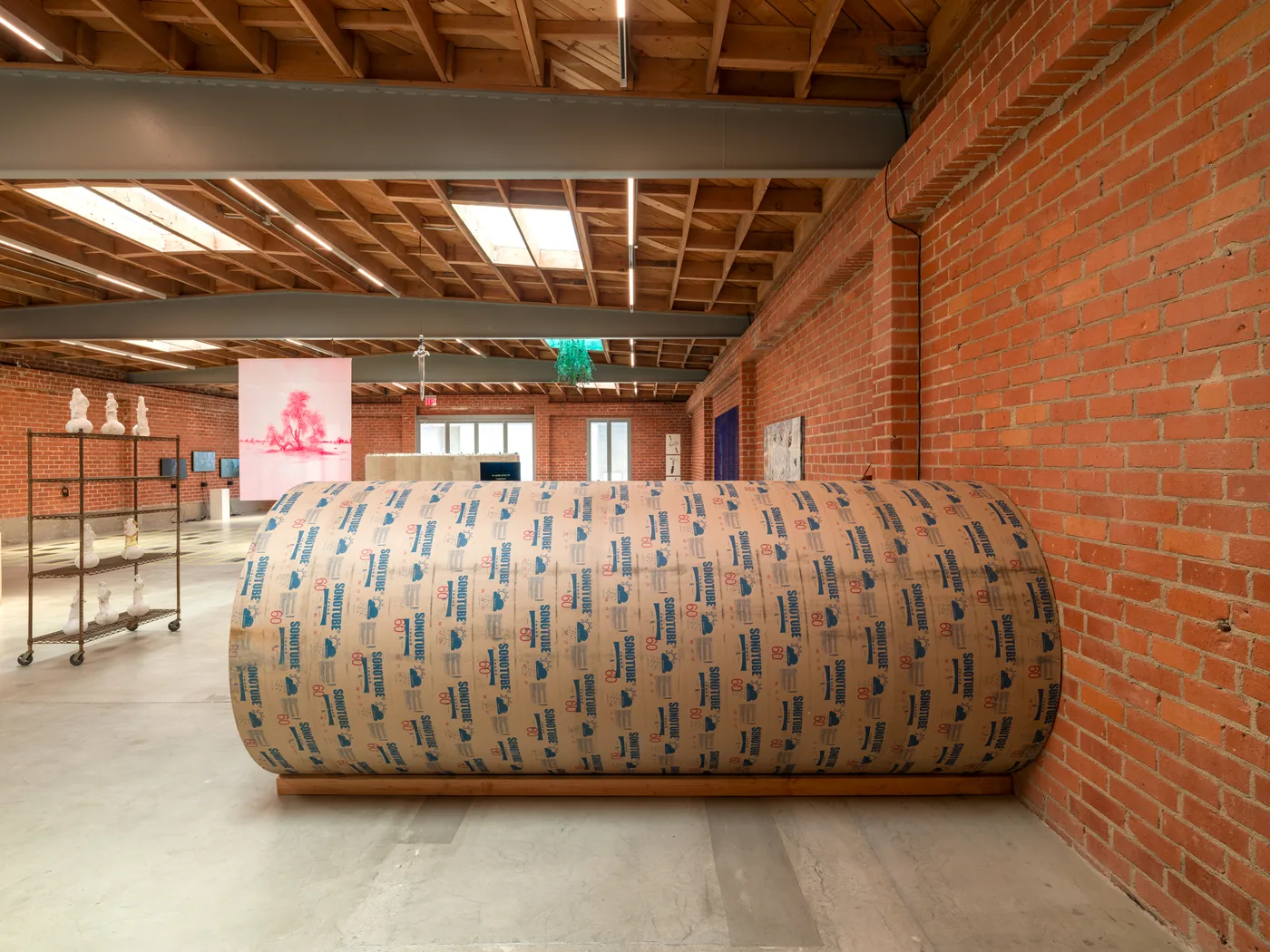
Through conversations with Oscar Tuazon and the exhibition team, the installation became a large cardboard Sonotube lying horizontally in the gallery. From outside, it could resemble infrastructure: a water channel, conduit, tunnel, or temporary shelter.
Only one visitor could enter at a time.
Inside, the participant lay on a felt blanket, put on headphones, and listened to the 7:33 audio work in darkness.
We never physically entered the installation ourselves.
The work had been conceived in Iran and transmitted to Los Angeles as instructions, files, conversations, diagrams, and fragments of information. Its final material form was developed and realized remotely with Oscar Tuazon and Aram Moshayedi.
This distance was not external to the work. It became part of it.
The installation itself had undergone the same process of unstable transmission described by its sound.
Context and circulation
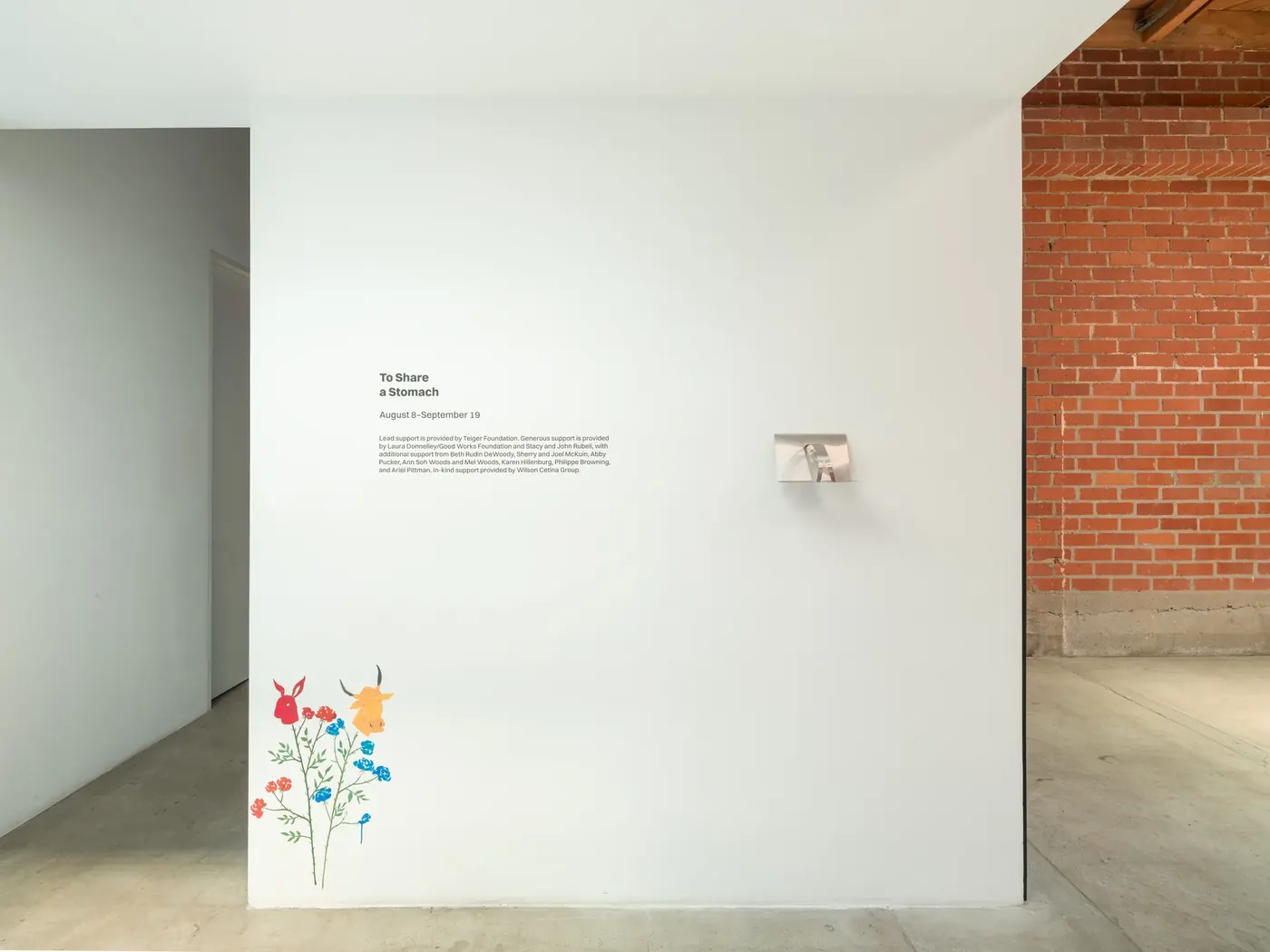
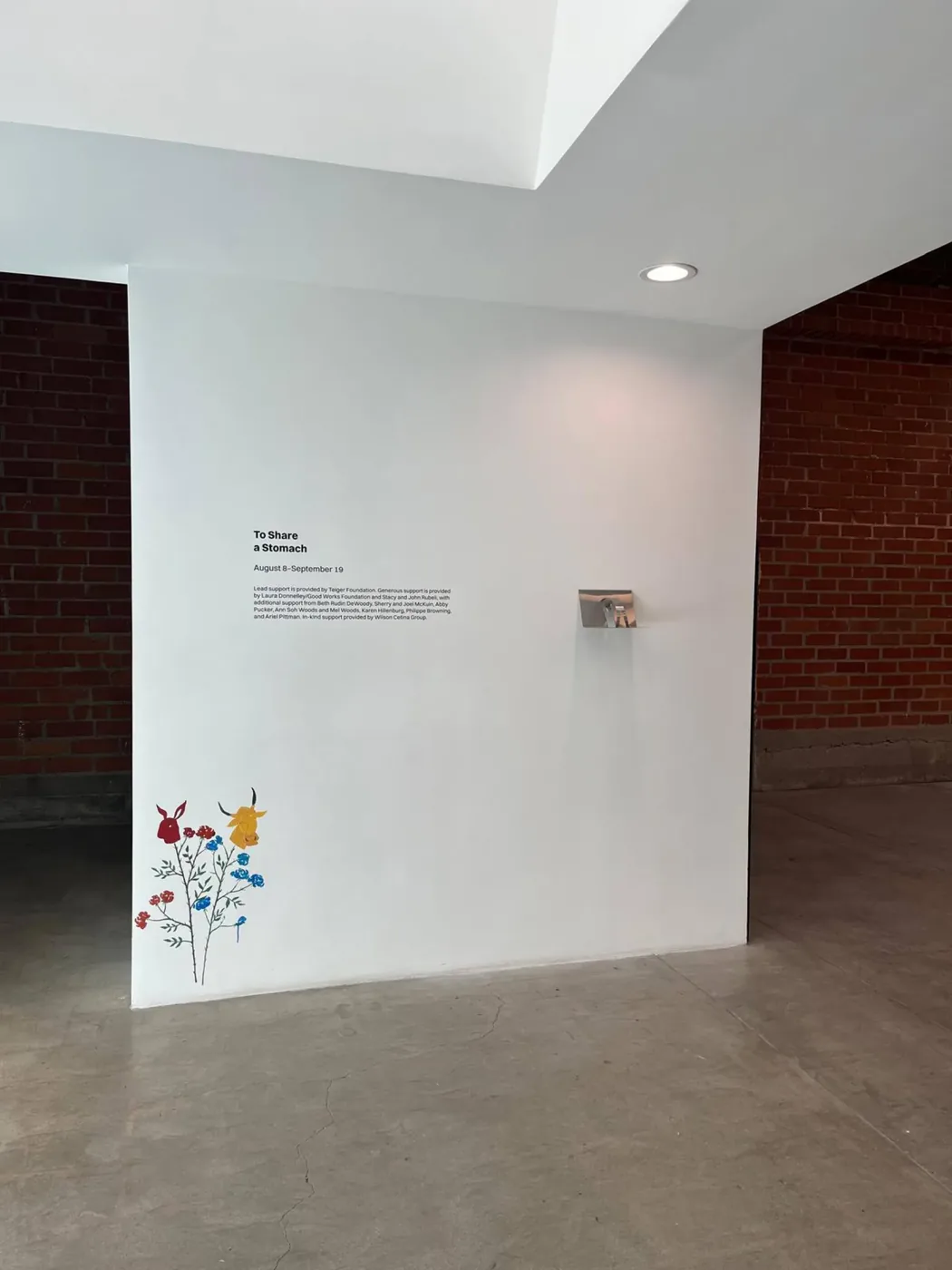
To Share a Stomach
That condition extended across To Share a Stomach.
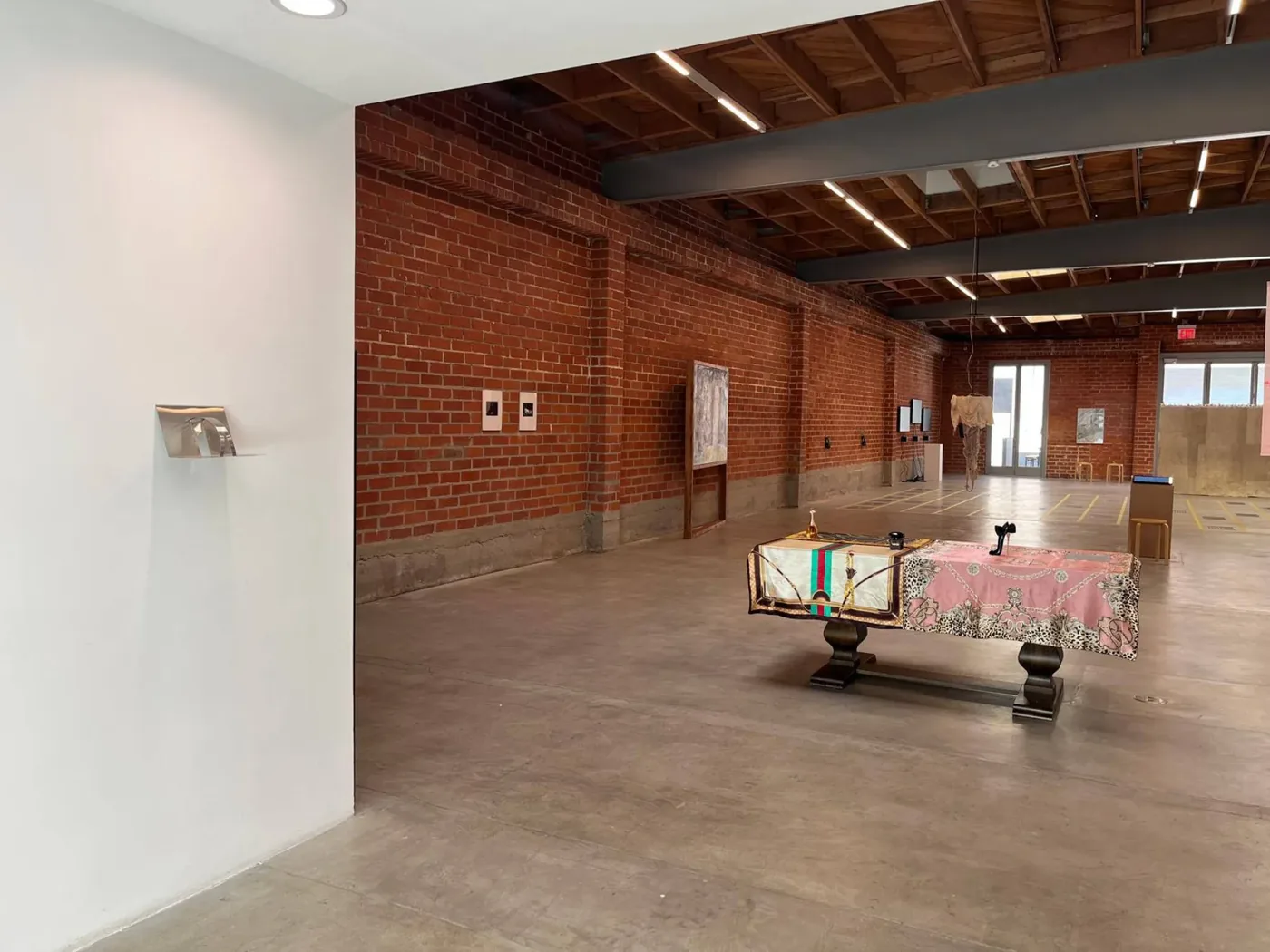
The exhibition brought together works initiated by 25 artists in Iran and materialized in Los Angeles with 24 collaborators. Works crossed borders as files, instructions, conversations, recordings, images, and partial information while internet disruptions, displacement, lost studios, physical distance, and a five-month production period continually altered what could be transmitted.
The resulting works were therefore not necessarily exact realizations of an original proposal.
Can You S…? existed inside this structure: a work about unstable transmission that was itself transformed through transmission.
Even the exhibition title emerged through deliberate mistranslation. Aram Moshayedi translated “empathy” away from its conventional association with the heart and toward the stomach: To Share a Stomach.
The audio-zine
The installation does not end when the listener leaves the tube.
A QR code gives visitors access to a downloadable audio-zine: a limited sequence of unique editions derived from the 7:33 work.
But circulation damages the work.
Each download advances the system to another edition, and every edition is progressively more degraded than the one before it.
The earliest listener receives an almost intact recording.
As the sequence progresses, words begin to disappear. Sentences overlap or fragment. Breaths distort. Frequencies erode. Silences extend. Parts of the signal are replaced by noise.
Eventually, the original piece becomes almost impossible to reconstruct from the downloaded file.
What remains is residual signal: fragments of language, corrupted sound, static, and finally noise.
The audience therefore does not simply receive or reproduce the work. Its circulation becomes the mechanism of its erosion.
“The piece destroys itself by being transmitted.”
The audio-zine turns distribution into part of the composition: every act of access permanently changes what can be accessed next.
Editions as a system
The editions were not manually exported as a collection of arbitrary alternate mixes.
A degradation system was developed around the original audio, producing a sequence of progressively altered versions while maintaining the temporal structure of the source.
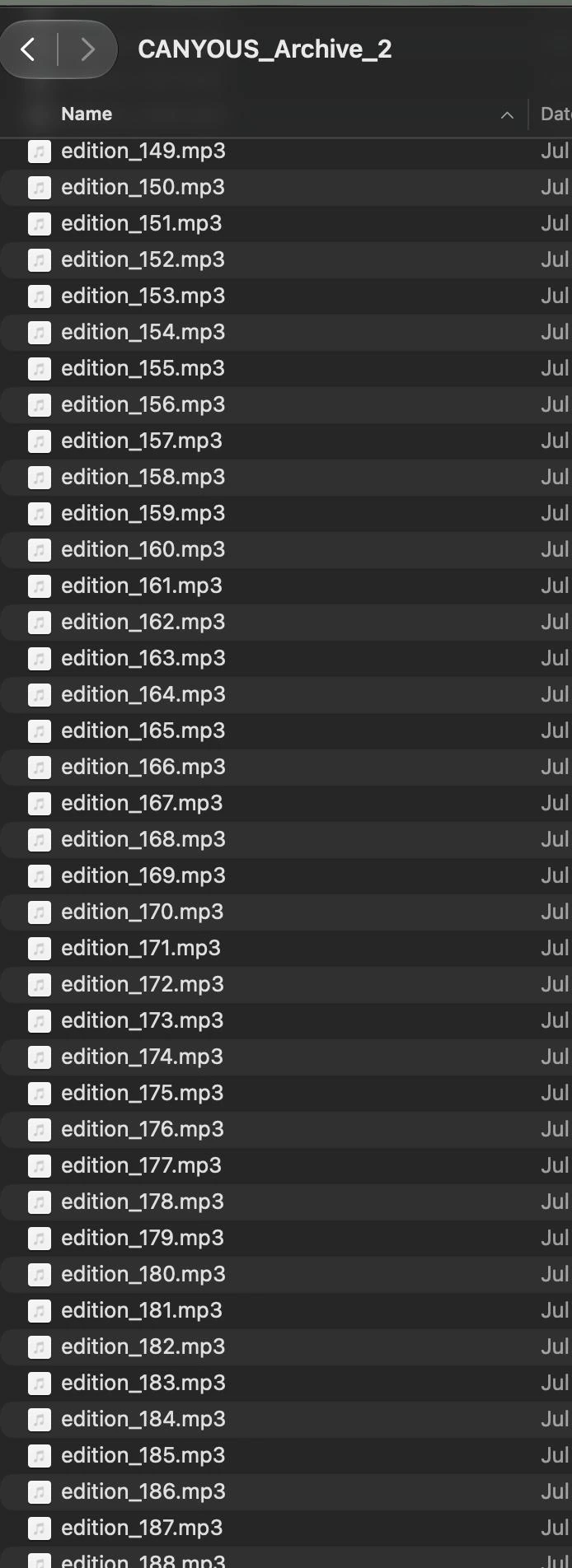
The archive contains the successive states of the work: edition_001, edition_002, edition_003 … each representing a different point in its disappearance.
The system connects the physical installation to a web-based distribution mechanism. A visitor scans the work, requests an edition, and receives the current state. That transaction advances the work for the next visitor.
The website therefore functions not simply as documentation or a download page, but as part of the artwork's behavior.
Transmission has a consequence.
Software and credits
Development and engineering
The digital infrastructure for Can You S…? was conceived as part of the artistic system rather than as a separate presentation layer.
Hodjat Salimi developed the project website, frontend and backend architecture, download logic, edition system, audio degradation workflow, and the technical infrastructure connecting audience access to the progressive erosion of the work.
The audio composition and its successive digital states were developed so that the conceptual premise could operate as an actual system: each interaction produces a material consequence for the edition that follows.
In this sense, code, server logic, audio processing, and distribution are not merely tools used to present the work. They determine how the work exists over time.
The system performs the condition that the installation describes:
- signals fail;
- narration drifts;
- memory cannot fully stabilize;
- language arrives late;
- and transmission alters what is transmitted.
“Can you still feel my presence?”
Credits
- Medium
- Sound installation, Sonotube, downloadable audio-zine, website and software
- Duration
- 7 min. 33 sec.
- Artists
- Maryam Lashkari & Hodjat Salimi + Oscar Tuazon
- Audio and concept
- Maryam Lashkari & Hodjat Salimi
- Installation developed with
- Oscar Tuazon
- Web development, frontend and backend engineering, audio edition system and digital infrastructure
- Hodjat Salimi
- Presented as part of
- To Share a Stomach
- Curated by
- Aram Moshayedi
- Venue
- The Brick, Los Angeles
- Dates
- August 8–September 19, 2026
Can You S…? lives on as an audio-zine at its project website. canyous.com →
More from the installation