File 01 · Encountering Reza Abdoh
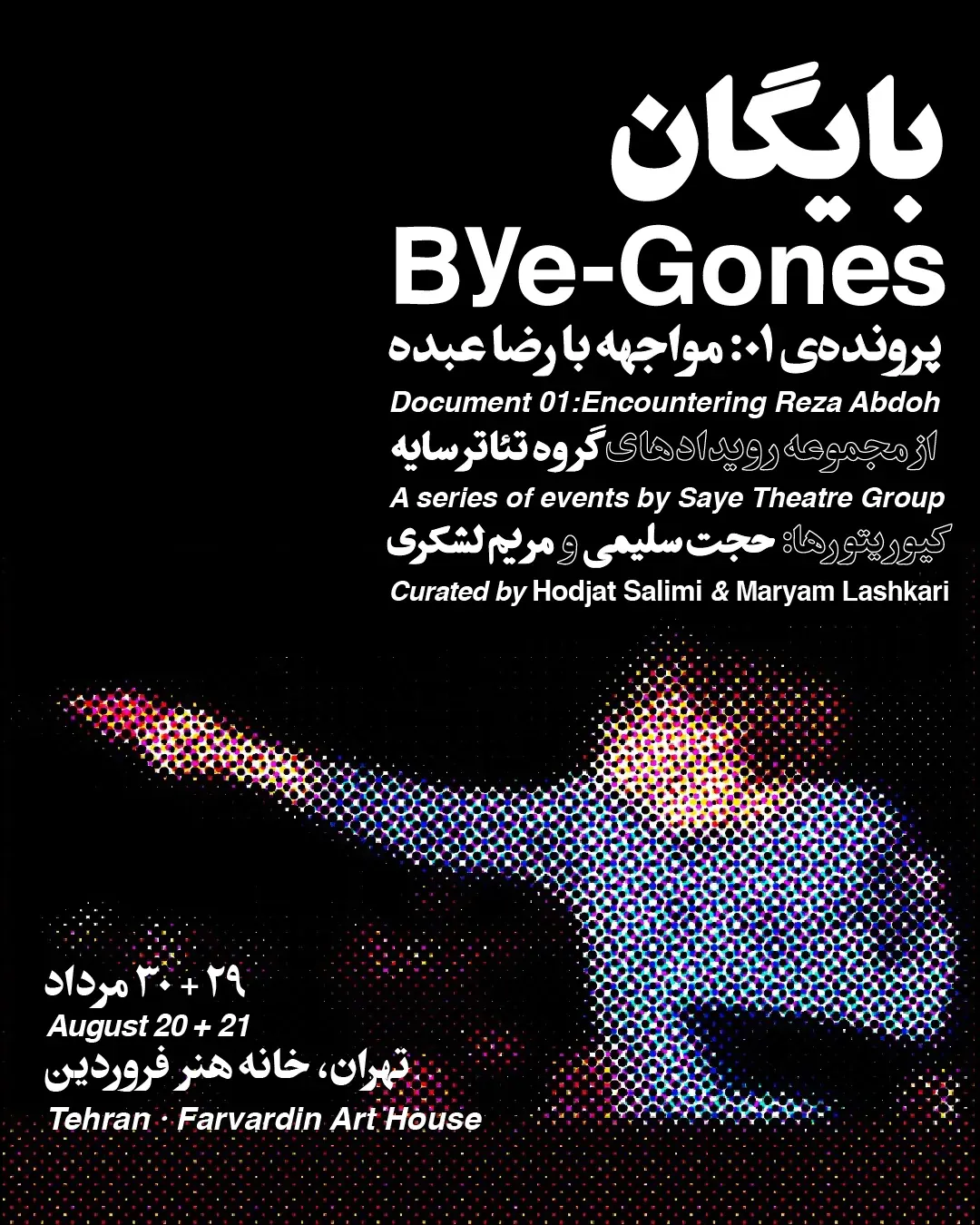
Bye-Gonesبایگان
Bye-Gones: File 01 — Encountering Reza Abdoh unfolded over two days through a sequence of four encounters, moving between digital mediation, performance documentation, conversation, archival material, and spatial installation.
At the center of the project was a question: what remains of a live performance after it ends? And can something within those remains be activated again?
More on the encounters
Encounter I — Before Arrival
The event began before the audience arrived at the venue. Following registration through the project's Telegram bot, each participant entered the first encounter according to the exact moment their registration was completed. Over the course of this process, the bot sent eight messages at different intervals, introducing materials related to the event and its curatorial framework.
Entering Bye-Gones, therefore, did not begin at the physical threshold of the space, but through a temporally structured digital encounter preceding it.
Encounter II — The Hip-Hop Waltz of Eurydice
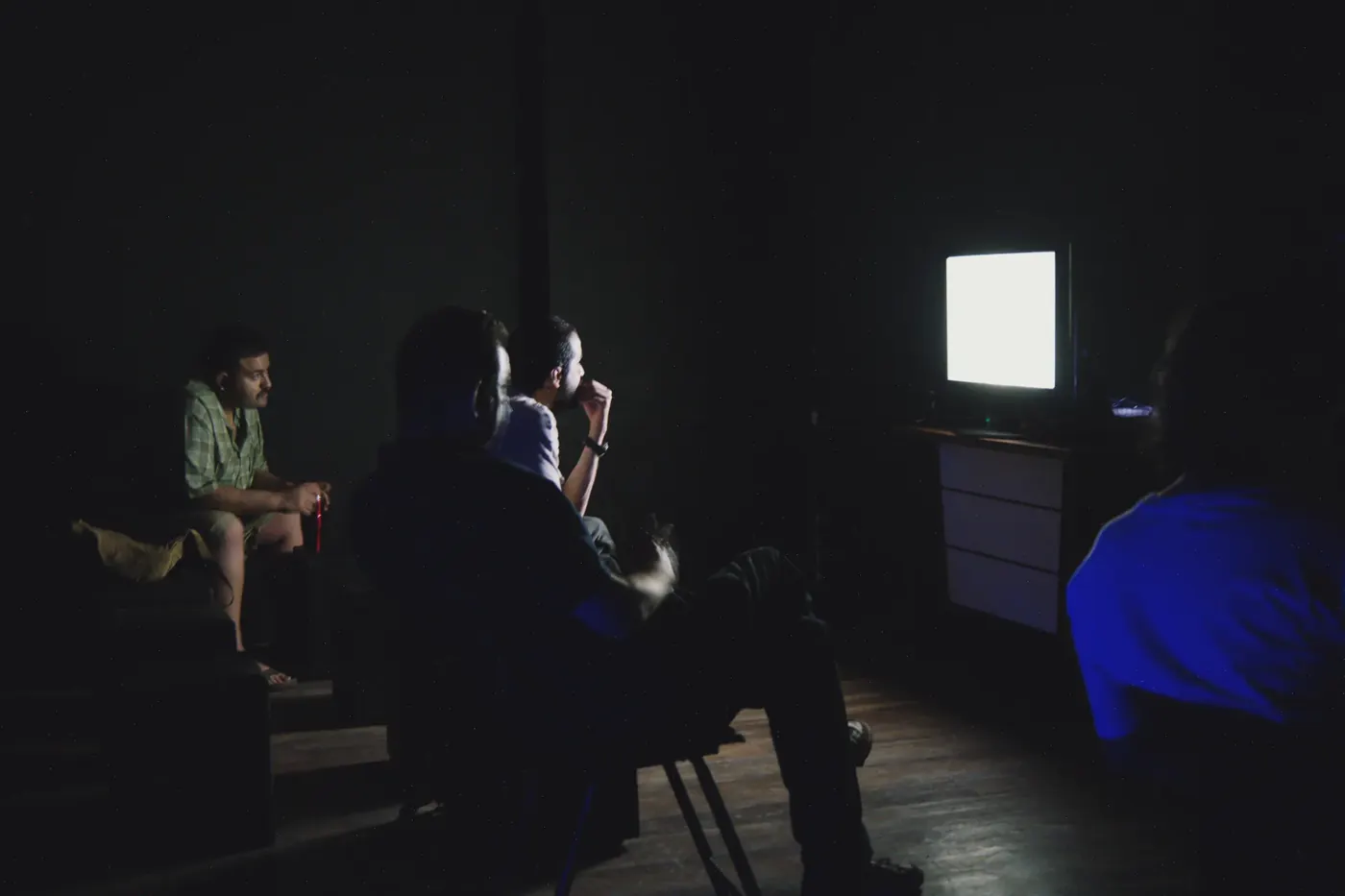
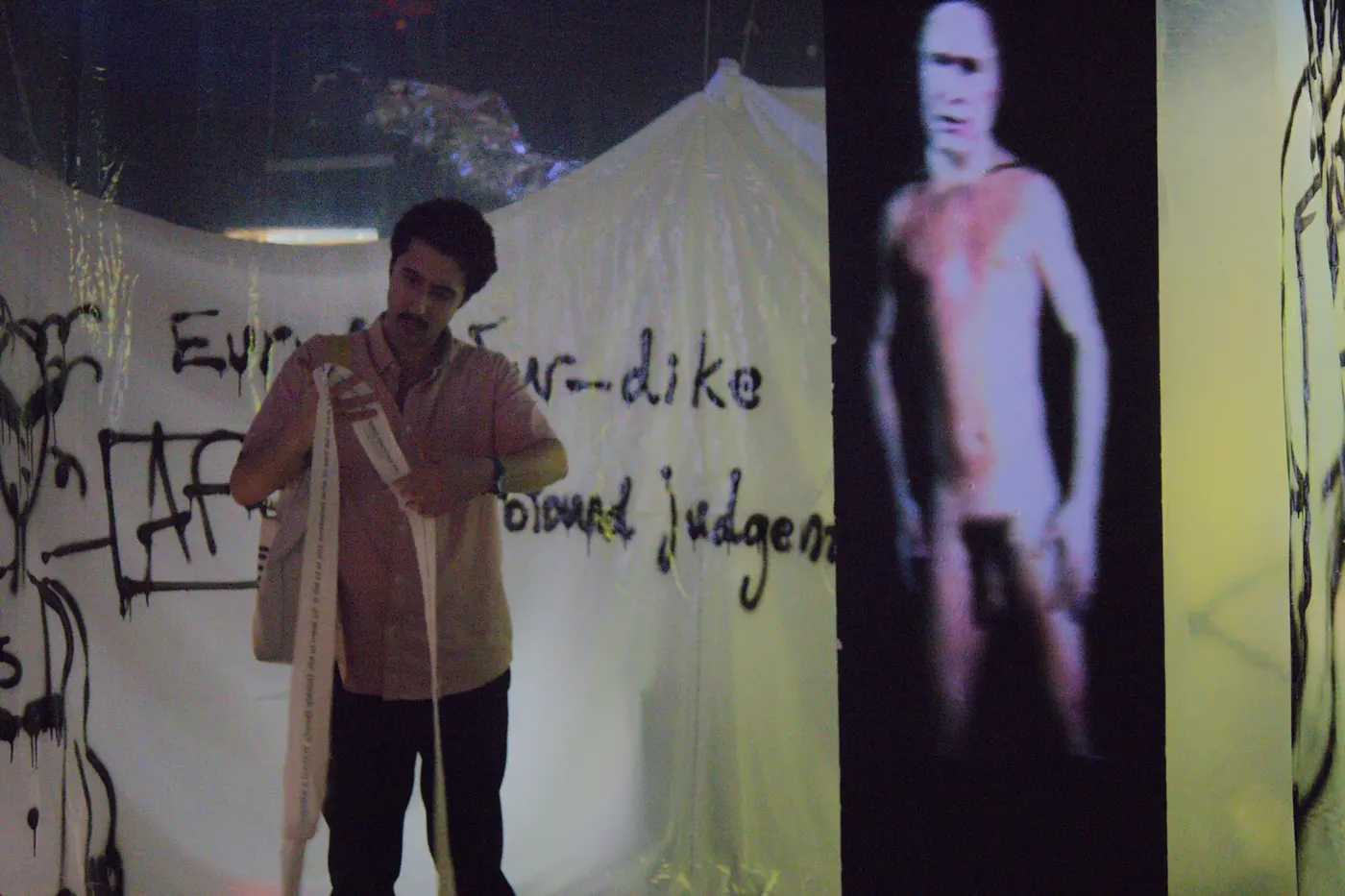
For the second encounter, audiences entered a space in which a recording of Reza Abdoh's The Hip-Hop Waltz of Eurydice was projected across multiple surfaces. Visitors were free to move through the space and determine their own position in relation to the work.
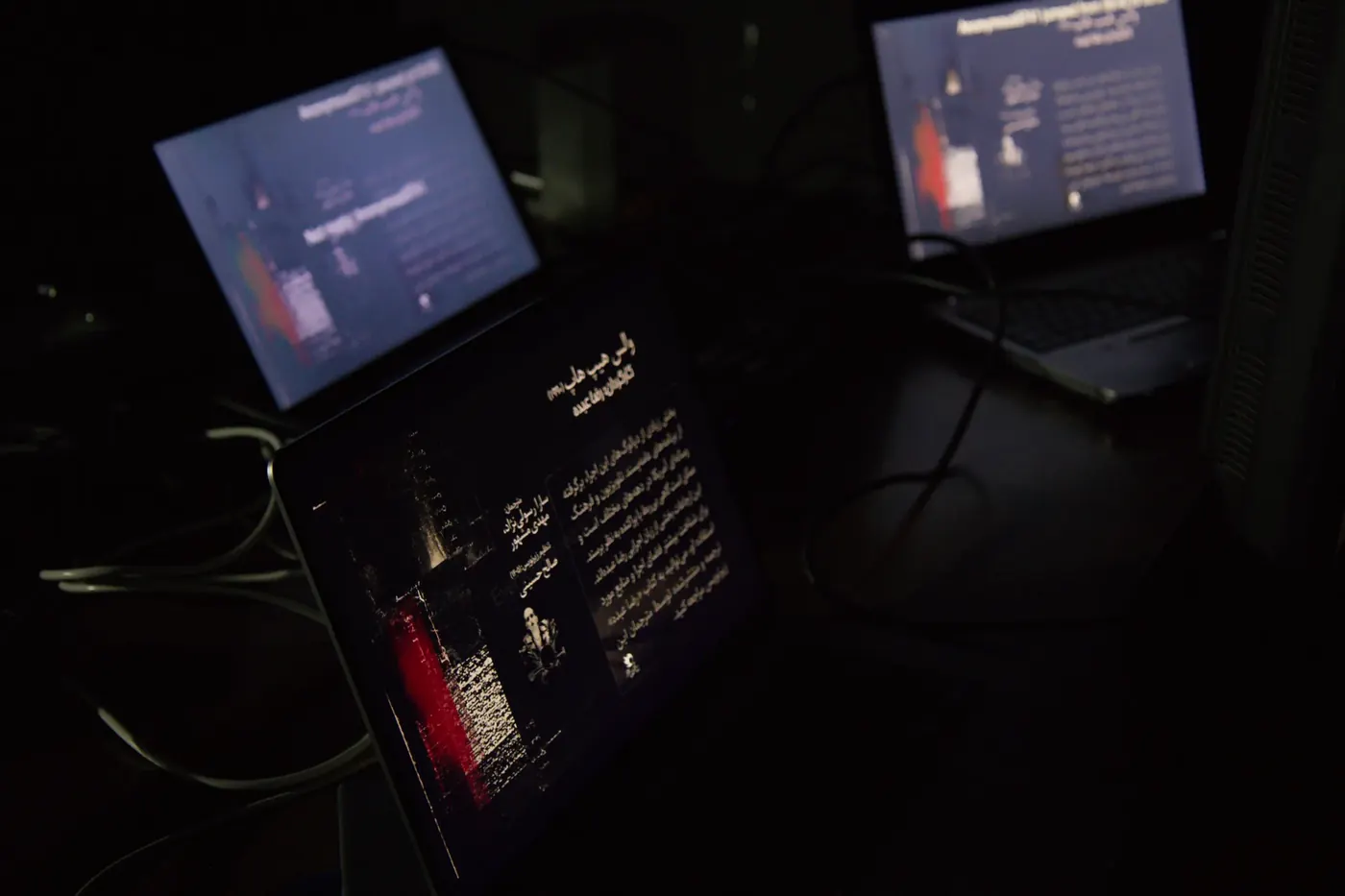
The recording was presented with Persian subtitles produced by Sayeh Theatre. The translation and subtitling were developed through close reference to the original play text and constituted one of the earliest materials produced for the Bye-Gones project.
Encounter III — Conversation
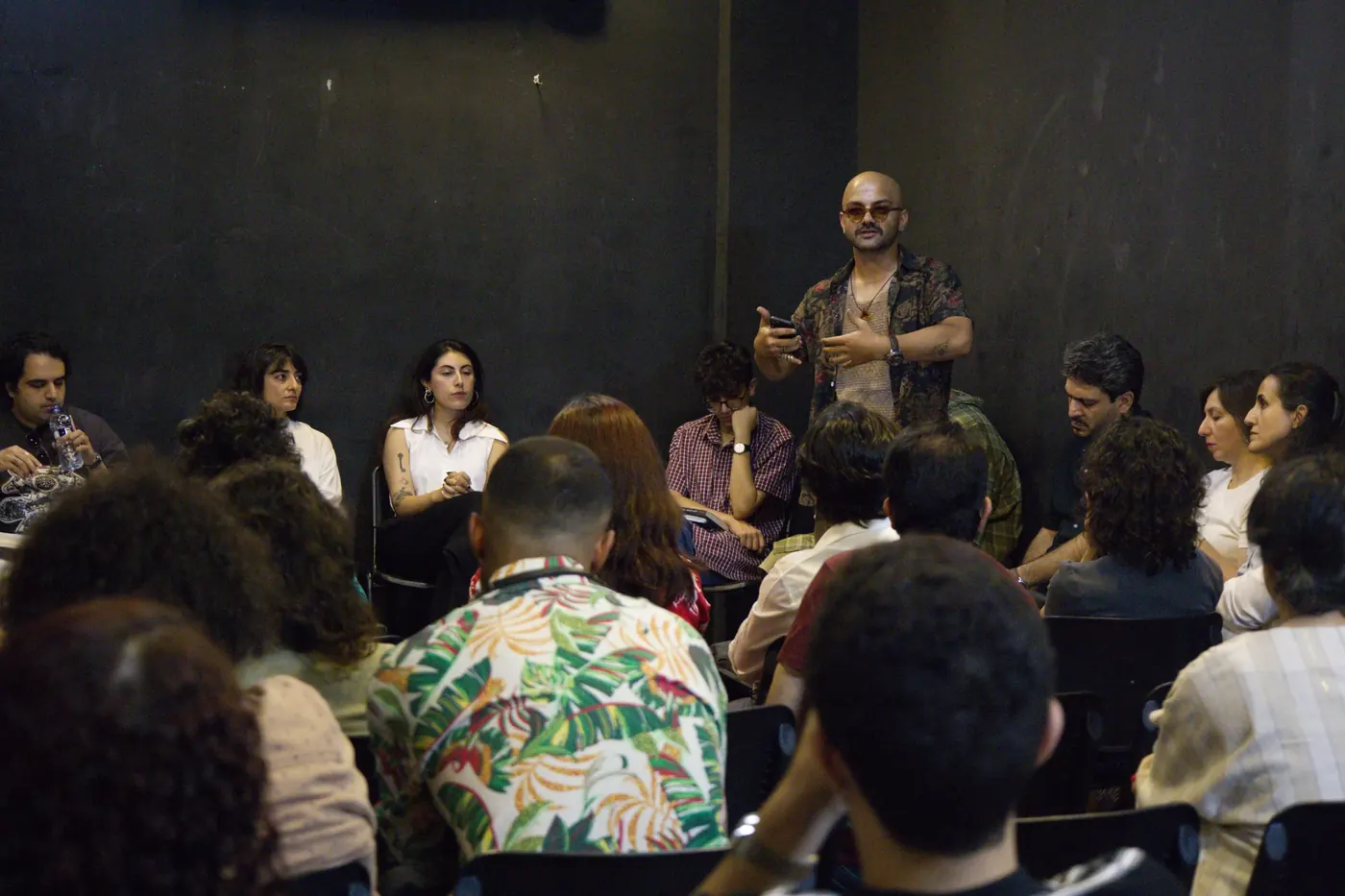
The third encounter began with a short introduction by the curators, Hodjat Salimi and Maryam Lashkari, followed by a conversation around the central questions of the project. The conversation developed with contributions from invited guests: Amir Rad, Sara Rasoulinejad, Avesta Mahmoudvand, Mohsen Xedri, Hedieh Ahmadi.
It gradually expanded into an open exchange with the audience, addressing performance, disappearance, documentation, memory, and the possibility of activating what survives after a performance ends. During this encounter, participants were also able to engage with a selection of archival materials and independent publications.
Encounter IV — Video Installation
With your first step into this labyrinth, you become an Orpheus descending into the world of what remains.
You are not allowed to look back, yet the past never takes its eyes off you.
The image leaves a trace of a moment. Sound separates from the body. And performance disperses into fragments.
Returning to the past is impossible. But perhaps it is possible to pass through what remains of it once again.
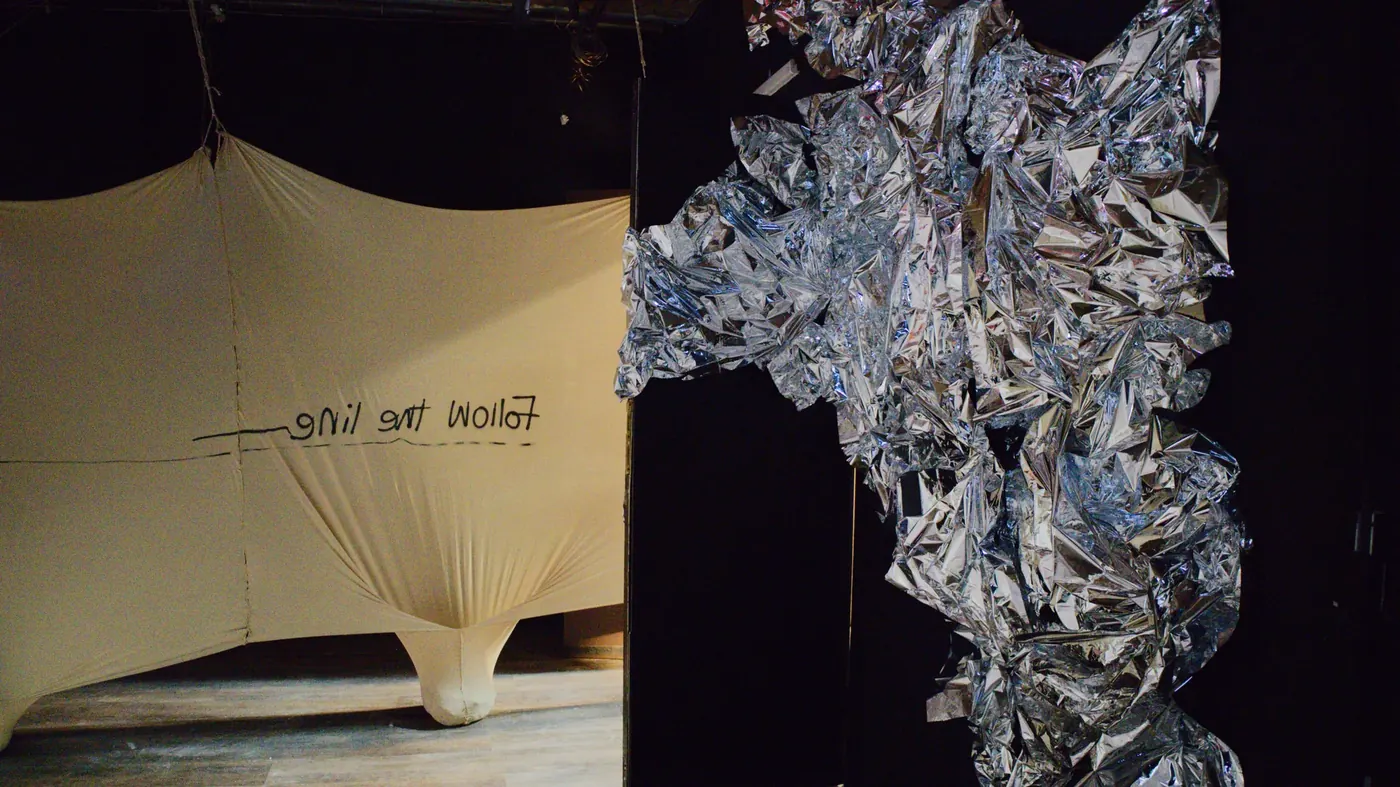
The fourth encounter attempted to spatially enact the central proposition of Bye-Gones: the archive not simply as evidence of something that has already disappeared, but as material that can be entered, traversed, rearranged, and experienced in the present.
Video works by Adam Soch formed the primary material of the installation. Presented with the artist's permission, these works were shown in Tehran for the first time.
The videos had originally been produced as source material for Reza Abdoh, who selected and incorporated portions of them into several of his performances: The Hip-Hop Waltz of Eurydice, Bogeyman, Tight Right White, The Law of Remains.
Rather than attempting to reconstruct Abdoh's performances, the installation returned to some of the image-material that existed around and within them. Distributed across monitors, projections, and multiple surfaces, these fragments formed an environment through which visitors could physically move.
The installation approached these surviving images not as a route back toward an original performance, but as remains with their own material and temporal presence: fragments capable of producing another encounter in the present.
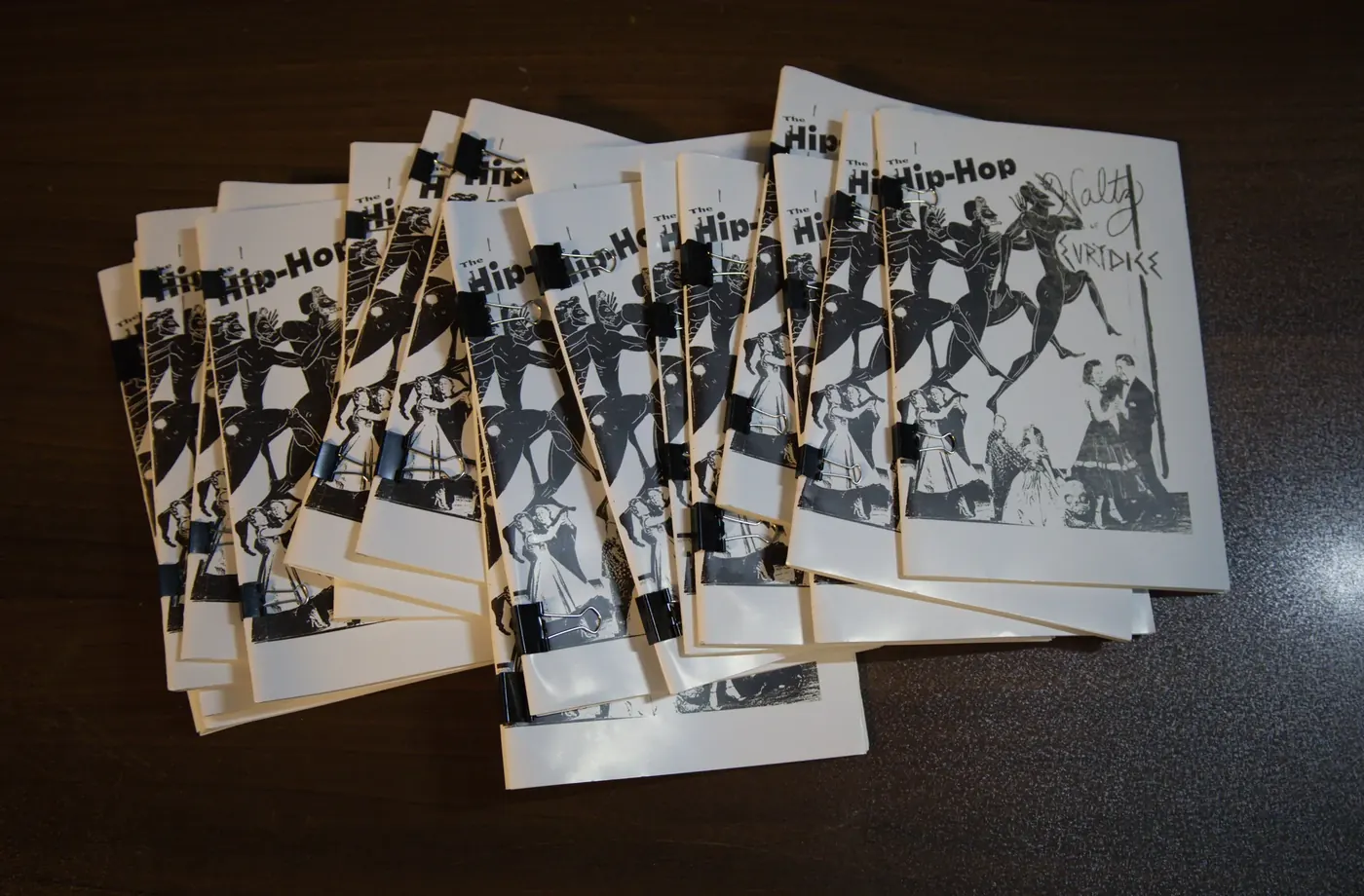
At the end of the labyrinth, visitors encountered a reprint of the original zine associated with the 1990 production of The Hip-Hop Waltz of Eurydice. Reproduced with permission from its rights holders, the zine was made available for visitors to encounter as another surviving material from the work.
Credits
- Curation & spatial design
- Hodjat Salimi, Maryam Lashkari
- Scenography
- Bahar Mirtavoosi
- Scenography technical consultant
- Mehrbod Omidipour
- Scenography assistants
- Aida Aghasi, Saeed Kanaanian
- Video installation
- El Shekari, Hodjat Salimi
- Projection mapping
- Zhaleh Abutalebian
- Poster design
- Ali Sabeti
- Assistant & coordinator
- Sara Moghaddas
- Telegram bot — design & development
- Hodjat Salimi
- Photography & video documentation
- Yekta Tavakoli, Kasra Karimi
- Zine reprint
- Tuts Archive
With thanks to Adam Soch, Negar Azimi, Tiffany Malakouti, Mehdi Mashhoor, Hossein Salimi, and Khaneh Honar Farvardin.
A more extensive archival presentation of the project will follow.
Documentation